
Having worked in Kiev I’ve followed events closely – after all it’s one of the biggest geopolitical events since 9/11. Ukraine’s geostrategic location is of great importance too.
Europe’s second largest country with a population of 44.6 million, it’s a significant market for both EU- and Russian-made goods.
Ukraine also happens to be one of the world’s most important mineral producing countries, in both the range and size of its reserves. It has Europe’s third-largest shale gas reserves.
Dubbed Europe’s breadbasket this agriculturally important country also plays an important role in the global food supply chain, producing and exporting grain across Europe and as far as China, mostly from ports in Crimea.
As well as food products major exports include fuel and petroleum products. It’s a key transit point for oil and gas coming from Russia and Central Asia into Europe.
It produces ferrous and non-ferrous metals essential to the global economy. In machinery and transport equipment it ranks in the top nine countries in aerospace hardware engineering and production.
Buffer state
It’s also a significant manufacturer of weapons systems. Ukraine shares a 1,576km-long border with Russia in the east, making it militarily important to both Russia and the West as a buffer state and to the NATO Alliance as a way of preventing Russia from expanding her influence westwards.
In reality Ukraine could be a wealthy country. However, even before the current situation it had huge problems to overcome; they are infinitely worse now, with no clear solution to an escalating problem deeply rooted in history and culture.
Although I have a balanced perspective of the crisis having watched coverage in both the Western and Russian media, and have my own thoughts, I don’t want to delve into the politics of the crisis.
I do, however, wonder what impact it might have on the security profession in the UK and Europe if events escalate.
The security situation in Ukraine is self-evident; the country is on a precipice. Although it’s unlikely to descend into a third world war, it could turn into another Yugoslavia, with inter-ethnic tension and old grievances stoked by extremists on the far right and left and fuelled by outside interference.
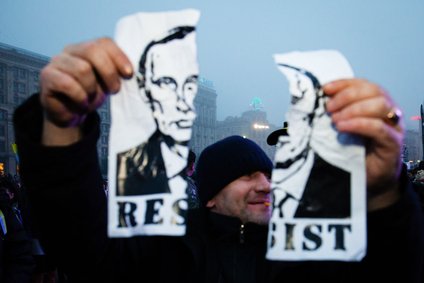
Civil unrest, which started in Maidan Square as mass demonstrations spread throughout Ukraine and spiralled into indiscriminate violence and shootings, was witnessed by audiences worldwide.
Clearly, a state of civil unrest increases rates of many types of crime as well as the severity of some criminal acts.
We could witness horrific acts of ethnic cleansing, indiscriminate killing of civilians, terrorist attacks and bombings, ultimately human rights abuses of the types TV audiences have become accustomed to in Syria, Iraq, Afghanistan, Libya, Egypt, and even Bahrain (which strangely barely gets a mention in the western media).
Sadly, as we have seen, once started these things are difficult to end.
So how could it affect Europe and the UK from a security prospective? I would stress that by ‘security’ I’m referring to ‘economic security’, for which, as security professionals, we share responsibility to mitigate loss and secure profits in our organisations.
We’ve already witnessed volatility in the financial markets and a rise in the cost of bread and grain products on the world market. What happens if Europe’s gas supplies are compromised, either by Ukraine or Russia?
Put simply, it all equates to rising inflation; things in Europe and the UK will cost more.
The EU has pledged huge financial aid packages to Ukraine at a time when Europe is struggling with austerity measures, the results of which we’ve all witnessed, particularly in Athens, where civil disturbances occur regularly.
It is feasible that rising prices will cause looting and civil unrest will spread, prompting a rise in criminal damage. Various political and neo-political groups may capitalise on the conflict.
What effect might it have on the security profession as refugees seek sanctuary in the UK and Europe, where communities of Ukrainian and Russian immigrants could become a breeding ground for terrorists hell bent on killings and bombings in reprisal for events in their home countries?
In a globalised world where the notions of ‘security’ and ‘democracy’ have become synonymous with stock market ‘ups and downs’, one can only hope that those forces influencing the unfolding story in Ukraine have learned from past mistakes.
Free Download: The Video Surveillance Report 2023
Discover the latest developments in the rapidly-evolving video surveillance sector by downloading the 2023 Video Surveillance Report. Over 500 responses to our survey, which come from integrators to consultants and heads of security, inform our analysis of the latest trends including AI, the state of the video surveillance market, uptake of the cloud, and the wider economic and geopolitical events impacting the sector!
Download for FREE to discover top industry insight around the latest innovations in video surveillance systems.