IFSEC Insider is operated by a business or businesses owned by Informa PLC and all copyright resides with them. Informa PLC's registered office is 5 Howick Place, London SW1P 1WG. Registered in England and Wales. Number 8860726.
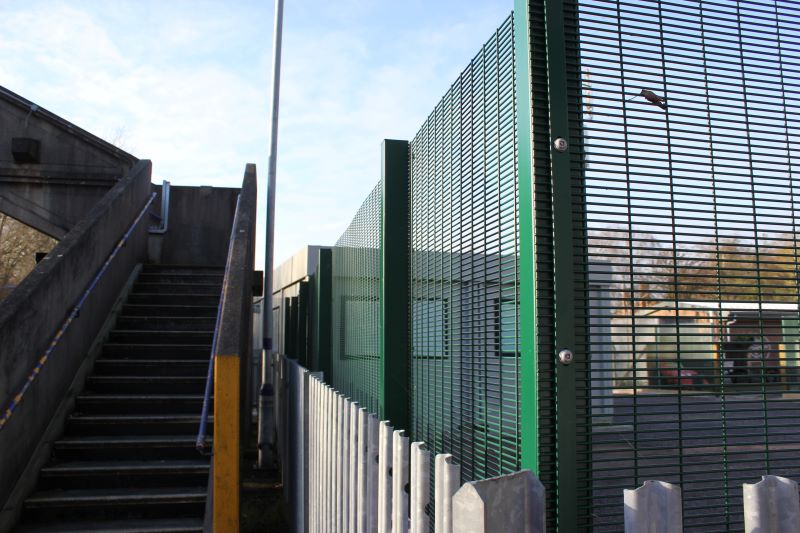
A new survey from Jacksons Fencing has revealed the challenges faced by civil engineers to ensure perimeter safety as railway infrastructure undergoes rapid expansion.
Key takeaways from the survey included:
A rise in anti-social behaviour, ‘vandalism’ (55%) and ‘trespassers with criminal intent’ (42%) are the ‘biggest threats’ to railway safety
‘Lack of time’ and ‘tight budgets’ are the main challenges faced when designing railways (55%)
Railway engineers state knowledge of rail safety, regulations, and standards, ‘could be improved’
With government plans to increase the railway infrastructure in the UK, research was commissioned to find out if perimeter safety was high on the design-agenda and what challenges civil engineers faced when designing in ways to keep the public safe from harm.
Railway engineers are also feeling the strain of the recent ramp in infrastructure projects, with 55% of respondents stating that ‘designs need to be completed within too short a time frame’ and that ‘small budgets are ‘making specifying difficult’. The study found that, according to railway engineers and designers, the threat of ‘vandalism’ was the biggest concern to railway safety. This was followed by ‘trespassers with criminal intent’ (42%) showing the growing need for effective security solutions on the UK’s railways. This could also be a further reflection of the recent spike in anti-social behaviour which is being seen across the UK as lockdown measures ease.
Beyond time and budget constraints, the survey also found that more needed to be done by the engineering community to understand the current standards associated with boundaries and safety. In fact, 68% of respondents agreed that more knowledge was needed overall.
In April 2019-May 2020, the Office for Rail and Road reported that suicide rates have risen in the past nine years, increasing from 192 fatalities in 2001/02 to 271 fatalities in 2018/19. Passenger fatalities also increased, climbing from 9 in 2017-18 to 17 in 2018/19. The latest railway statistics in the UK also show that more needs to be done to protect the public from harm around railway lines.
Peter Jackson, Managing Director, Jacksons Fencing said: “It’s clear from our research that transport security doesn’t rest solely on the policymaker’s or owner’s shoulders. Engineering industry professionals also have a part to play in mitigating risks around railway border safety.
“We can see from our result that this is not always easy, a lack of time at the specifying stage, tight budgets, and gaps in knowledge regarding the product options available are hindering progress.”
The Future of Fire Safety: download the eBook
Is the fire protection industry adapting to the post-Grenfell reality fast enough? At FIREX International 2019, Europe's only dedicated fire safety event, some of the world's leading fire safety experts covered this theme. This eBook covers the key insights from those discussions on the developments shaping the profession, with topics including:
Grenfell Inquiry must yield “bedrock change” – and soon
After Grenfell: Jonathan O’Neill OBE on how austerity and policy “on the hoof” are hampering progress
Hackitt’s Golden Thread: Fire, facilities and building safety
Fire safety community has to “get on board” with technological changes
Survey reveals unspoken danger of railway perimeter safety A new survey reveals challenges faced by civil engineers to ensure perimeter safety as railway infrastructure undergoes rapid expansion.
IFSEC Insider
IFSEC Insider | Security and Fire News and Resources